
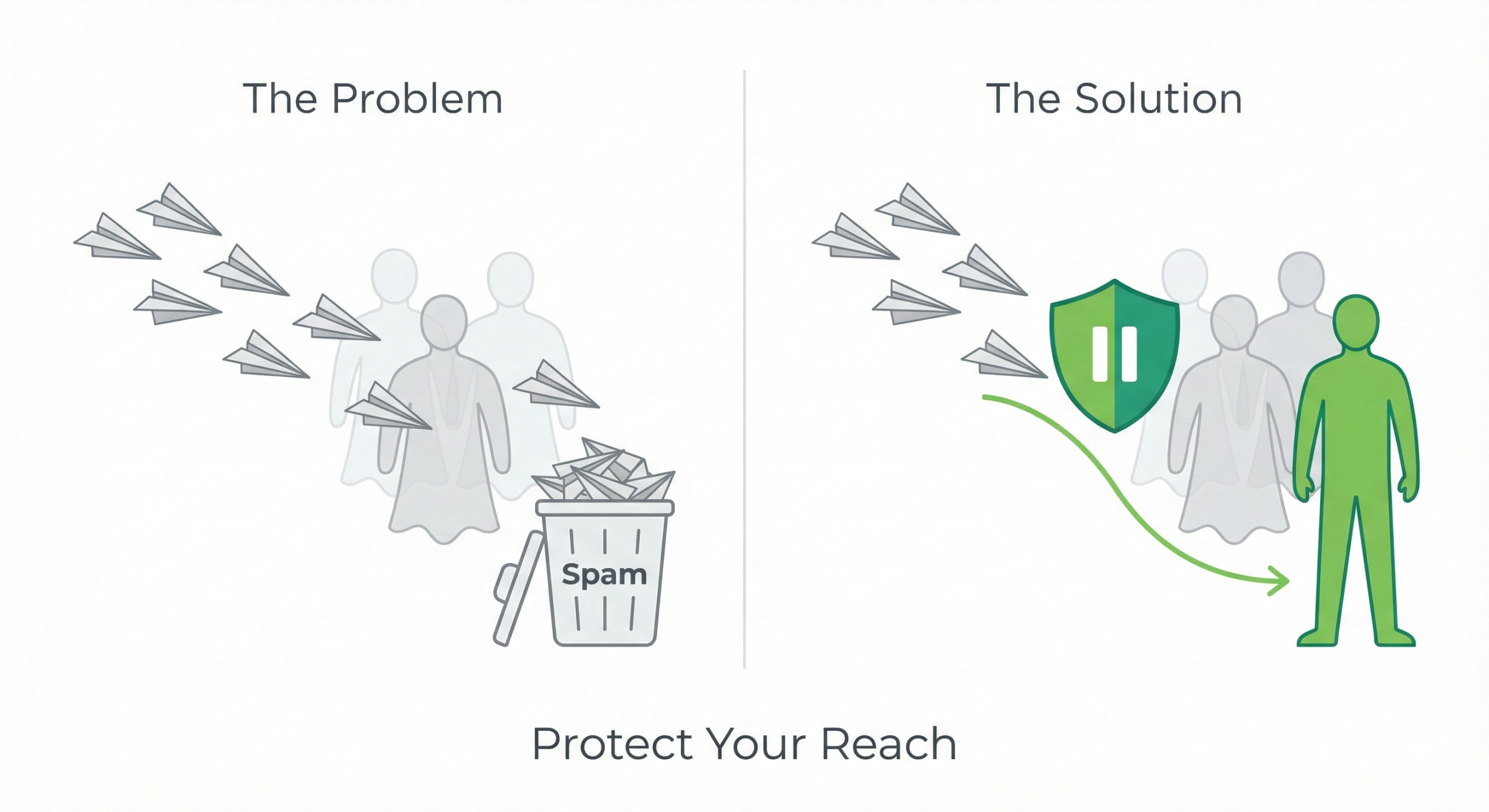
Marketers are obsessed with open rates. We A/B test subject lines, tweak designs, and time our sends down to the minute. Yet, we often overlook the single biggest threat to campaign success: The recipient who isn’t there.
When you send an email to someone who is “Out of Office” (OOO), you might think it’s harmless. They’ll just read it when they return, right?
Wrong.
To the algorithms controlling Gmail and Outlook inboxes, it looks very different. Sending to “ghosts” isn’t just a waste of time—it is an active threat to your deliverability.
Here is why you need to stop sending to empty desks, and how pausing these contacts can save your bottom line.
The Engagement Trap: Why Silence is Loud
Mailbox providers live on signals. They track who opens, who clicks, and who engages.
When you blast a campaign to hundreds of people currently on vacation, you generate zero engagement. To the algorithms, this looks like irrelevant content. You are artificially dragging down your own averages.
The consequence? Low engagement is the fastest route to the spam folder. By continuing to send to people who cannot reply, you signal that you are a sender who isn’t paying attention.
The Snowball Effect: From “Soft” to “Blocked”
Technically, an OOO reply is recorded as a “Soft Bounce.” Happening once, it’s not a crisis. The danger lies in repetition.
If you keep hammering the same address campaign after campaign while it bounces, the game changes. Many ISPs eventually treat these repeated soft bounces as a Hard Bounce.
Once that snowball starts rolling, you risk throttling—where ISPs slow down your delivery—or having mail from your domain blocked entirely.
Stop Paying for Dead Air
Most Email Service Providers (ESPs) like HubSpot or Mailchimp charge you based on volume or contact count.
Why pay to send emails that are guaranteed not to convert?
By automatically pausing messages to temporary OOO addresses, you typically trim non-performing volume by about 10%. This cuts direct costs, but more importantly, it helps you stay under typical bounce rate thresholds (< 2%). It’s simple math that your CFO will love.
The Hidden Opportunity: The Pivot
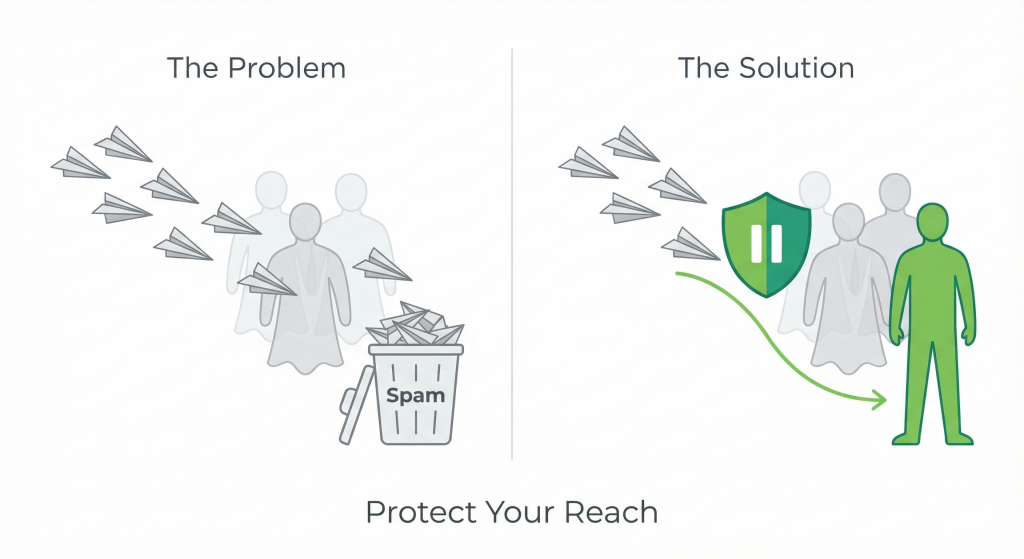
Here is the secret few marketers leverage: An OOO reply isn’t a dead end. It’s often a map.
Frequently, the auto-reply contains the name of an alternate contact—a colleague who is actually working and making decisions right now.
Instead of letting your email gather dust in a vacationing inbox, RoleRelay allows you to capture this new contact. This means you can reroute your sales pitch or newsletter to someone who can open, click, and buy today.
Conclusion
Pausing sends to vacationing contacts isn’t just polite. It’s a deliverability best practice. It protects your sender reputation, reduces unnecessary costs, and ensures your campaigns reach people—not ghosts.